The Pennsylvania Grand Canyon After the Crowds Leave
November 2, 2025
What to Expect When Staying at Canyon Country Campground
January 24, 2026
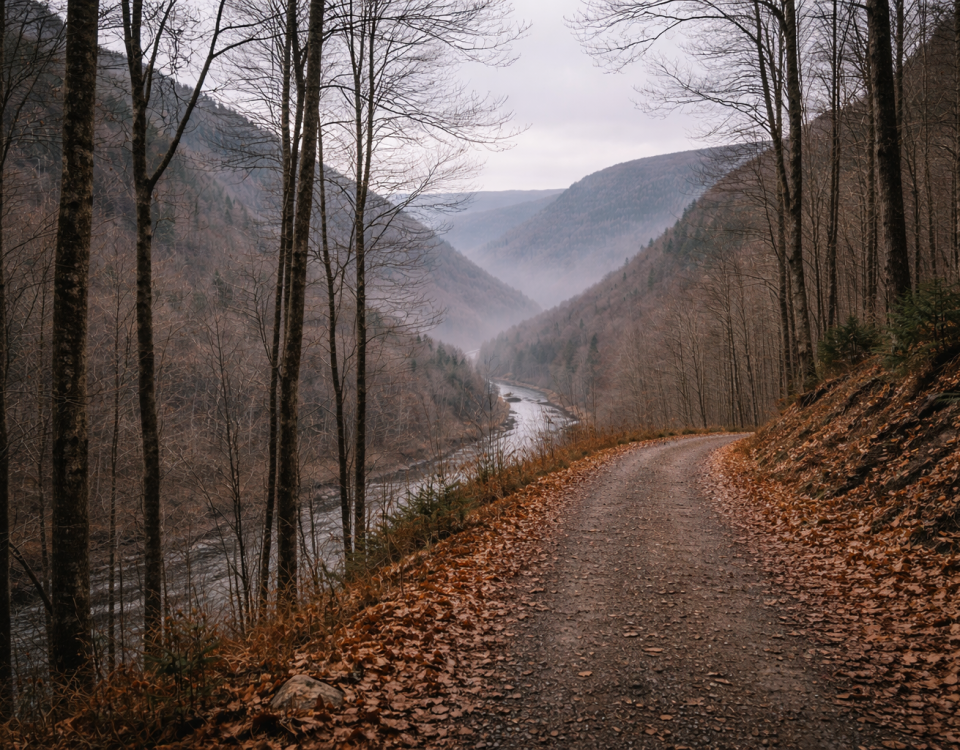
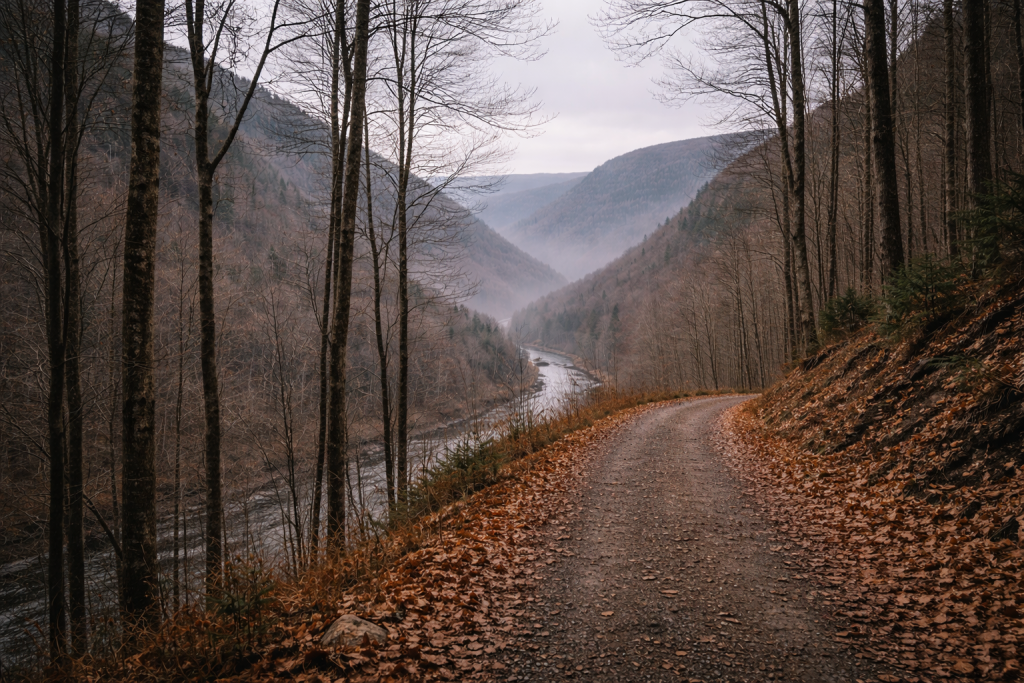
The Pennsylvania Grand Canyon doesn’t look like most places in the Northeast. The ridges feel bigger. The valley drops deeper than you expect. From an overlook, you can see layers of forest stretching into the distance — and Pine Creek winding below like a ribbon.
It’s a landscape that makes people pause and ask the same question:
How did this form?
Pine Creek Gorge: A Landscape Shaped by Time
The Pennsylvania Grand Canyon is officially known as Pine Creek Gorge. It runs through north-central Pennsylvania and reaches depths of roughly 800 to 1,000 feet in places. What makes it remarkable isn’t just the depth — it’s the scale of the continuous gorge and the way the terrain changes so dramatically from rim to valley floor.
This kind of landscape doesn’t happen quickly. Pine Creek Gorge is the result of long-term erosion, shifting water flow, and the slow work of time acting on rock layers beneath the forest.
Why the “Grand Canyon” Comparison Exists
While it’s not a desert canyon, the Pennsylvania Grand Canyon earns its nickname because of how suddenly the terrain drops away and how wide the gorge becomes across its rim. The perspective from overlooks can feel expansive, especially when you can trace Pine Creek below and see the canyon walls rising on both sides.
Many visitors first experience this view from Leonard Harrison State Park or Colton Point State Park, where the scale of the gorge is easiest to understand.
The Role of Water
Pine Creek is the heart of the gorge — and its primary sculptor. Over time, moving water cut into the underlying rock and soil, gradually deepening the valley. Seasonal runoff, rain, and spring snowmelt all contributed to erosion year after year.
What’s striking is that the gorge didn’t form from a single dramatic event. It’s the opposite: a landscape carved patiently, continuously, and almost imperceptibly — until one day you stand at an overlook and realize the “imperceptible” created something massive.
The Layers You Can See From the Rim
One of the reasons Pine Creek Gorge feels so visually complex is that it’s shaped by layers — not only of forest, but of geology. From above, you can often see bands and contours along the slopes. Those shapes come from differing levels of hardness in the underlying rock and how each layer responds to erosion.
This is also why certain parts of the rim appear sharper or more rugged than others. The landscape isn’t uniform — it has been shaped unevenly by water flow, weather, and time.
How the Ice Age Influenced the Region
Even though glaciers didn’t carve Pine Creek Gorge the way they shaped some other landscapes, the Ice Age still influenced the region. Glacial activity in Pennsylvania affected drainage patterns, water volume, and sediment movement. Those changes impacted how streams like Pine Creek behaved and how much erosion occurred over long spans of time.
It’s a reminder that landscapes are rarely shaped by just one force. Pine Creek Gorge reflects a mix of processes layered over thousands of years.
Seeing the Gorge From Above and Below
Overlooks provide the iconic “wide-angle” view of the Pennsylvania Grand Canyon — but to understand it, it helps to experience the gorge from within as well. The Pine Creek Rail Trail follows the valley floor and gives a completely different perspective: ridges rising overhead, the creek moving beside you, and the canyon narrowing and widening as you travel.
Together, the rim and the valley tell the full story — not just of beauty, but of scale.
Why Understanding the “How” Changes the Experience
Once you know this landscape was shaped slowly, the Pennsylvania Grand Canyon feels different. You notice the way the slopes fold into each other. You recognize that the creek below is still doing its work. You realize the gorge isn’t finished — it’s still evolving.
That awareness adds depth to the visit. The views don’t just look impressive. They represent time.
Camping season at Canyon Country Campground runs from April 15 through October 31, but Pine Creek Gorge itself is a year-round landscape. Whenever you visit, you’re looking at something shaped by countless seasons before yours — and countless seasons still to come.